Paper was never meant to be a perfume
Open an old book and you may notice much more than its words. The pages have shifted colour. The edges are worn. A faint aroma rises from the paper: perhaps something acidic or dusty, perhaps something warm, almost woody. Occasionally, it seems unexpectedly sweet.
We give these impressions one convenient label — “old book smell.” But books differ in the paper they contain, the materials holding them together and the conditions in which they have spent their lives. Their scents need not be identical.
The intriguing question is not whether all old books smell the same. It is what those differences might reveal about the materials themselves.
How paper changes with time
Cellulose is a major structural component of many papers; lignin and other substances may also be present depending on the material and how it was made. Heat, moisture, oxygen and time can influence chemical reactions within these materials. Some of the resulting substances can enter the surrounding air as volatile organic compounds, or VOCs.
In 2009, researchers writing in Analytical Chemistry measured compounds released during the degradation of historic paper. Their work connected those emissions with properties relevant to paper conservation, including acidity and aspects of its composition. [1]
This does not mean a person can date a book or diagnose its condition by taking a quick sniff. The study used laboratory methods capable of analysing trace substances far beyond what our noses can identify precisely.

Vanillin is not found only in vanilla pods
A study published in the Journal of Cultural Heritage in 2006 examined emissions from an aged book under natural and experimental conditions. Under the conditions studied, it characterised 36 volatile compounds, including furfural, 5-methylfurfural, vanillin and guaiacol — substances relevant to the degradation of paper components. [2]
Vanillin is familiar because it is one of the key odorant molecules associated with the smell of vanilla. Finding a compound does not, however, prove that an entire book will smell predominantly of it. What we perceive reflects a mixture of volatile substances, their concentrations and the sensitivity of the person doing the smelling.
One volume may suggest something soft and sweet; another can feel sharper, sourer or mustier. Paper, ink, adhesives, bindings and the environment all contribute to the story. Identifying a chemical ingredient from smell alone would be guesswork.
From a vanilla pod to the vocabulary of perfume
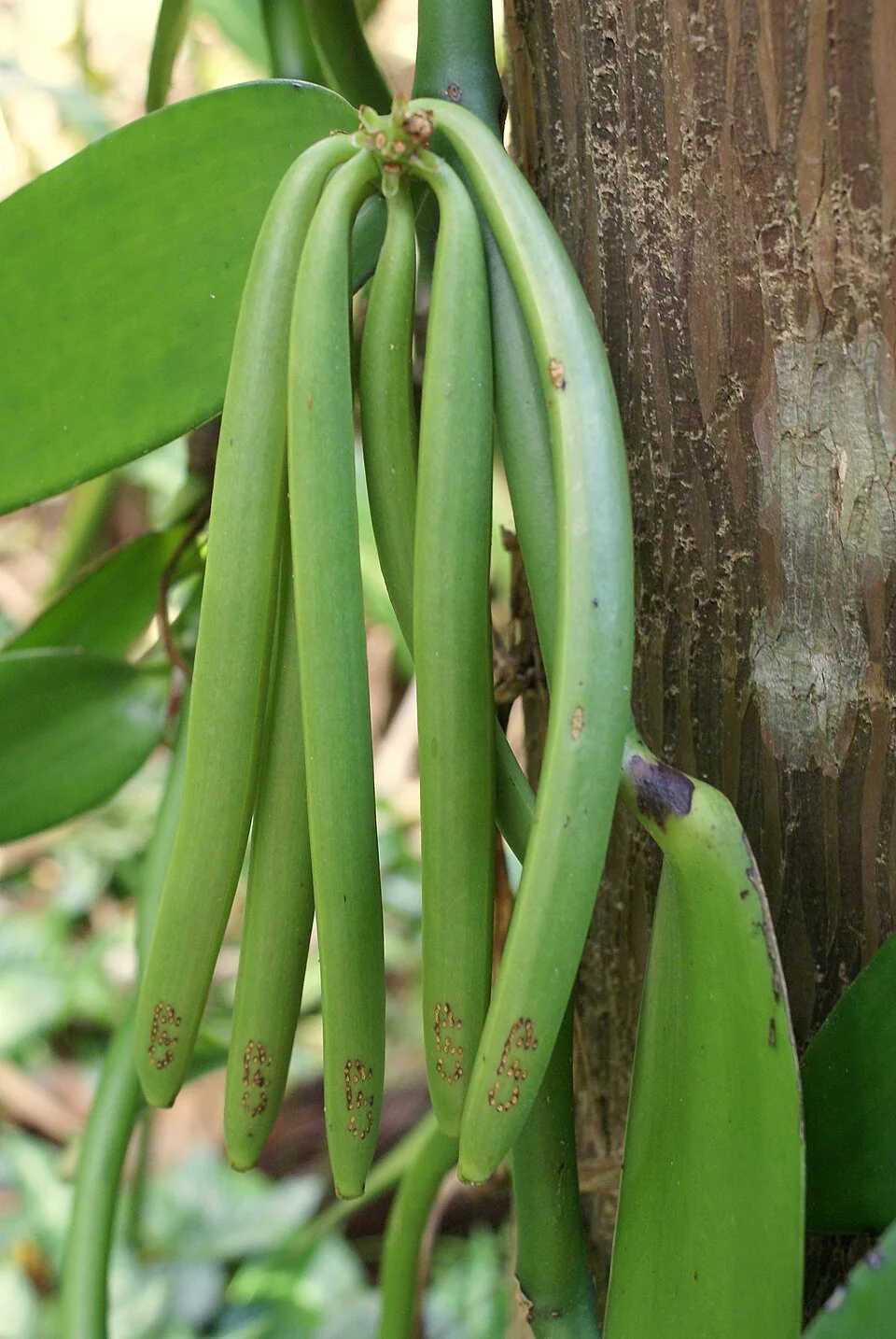
Vanillin contributes to the familiar aroma of vanilla and occurs in nature, including vanilla pods. It can also be produced through other raw materials and processes. This photograph shows one botanical source; it is not evidence of what any particular perfume contains.
In perfumery, scent is shaped not only by materials, but also by memory, emotion, and the associations people carry with certain smells. In that sense, the Vanillin note in ZCONY Piera offers a useful example of how a fragrance can evoke softness, warmth, and gentle sweetness through olfactive design.
The connection between this article and Piera, then, is not that the fragrance smells like an old book in any literal way. Rather, it shows how certain sweet tonalities can quietly suggest familiarity, tenderness, and the feeling of time held in memory. This is part of what makes fragrance so compelling: its ability to turn something invisible into something deeply felt.
Piera is mentioned here as an example of scent language and perception, not as proof of the source of Vanillin in the formula, nor as evidence that the fragrance was created to replicate the smell of old books.
The same word is not the same scent
When we call a smell “sweet,” we borrow a word from taste to describe an invisible sensation. We might think of vanilla, baked goods or warm wood, even though those comparisons are impressions rather than chemical measurements.
Perfumery uses a similar vocabulary. A fragrance note describes a perceived character; the name of a note is not, on its own, proof that the formula contains the plant or object it evokes.
What makes perfumery interesting is not its ability to reproduce an object exactly, but the way it can rearrange recognisable scent qualities into something with a different identity. A note may help tell a story without claiming that the pictured object was used to make the fragrance.

Should we try to keep the smell of age?
Scent can suggest an old bookshop, a reading room or a moment from long ago. That association does not mean allowing a book to deteriorate is a good way of keeping its history alive.
The Library of Congress recommends clean, relatively cool and stable storage conditions; avoiding intense light and extremes of humidity or temperature can help slow damage to books. [3]
A strong musty smell, particularly with signs of dampness or mould, deserves practical conservation and safety attention rather than romantic interpretation. Mustiness is not proof of age or value.
What will you notice the next time you open an old book?
Books have no scent formula. Yet their materials, environments and years of use can make themselves known in the air around a page. Perhaps the fascination lies less in finding one universal “old book smell” and more in noticing how no two volumes have lived quite the same life.